Confused between content writing vs copywriting? Learn the main differences, goals, formats, and examples in this complete beginner’s guide.
Many people use the terms content writing and copywriting interchangeably, but in digital marketing, they serve two entirely different purposes. While both involve writing for an online audience, their core objectives, styles, and strategies are distinct.
Understanding the difference between content writing and copywriting is essential whether you are building a website, hiring freelancers, or learning SEO.
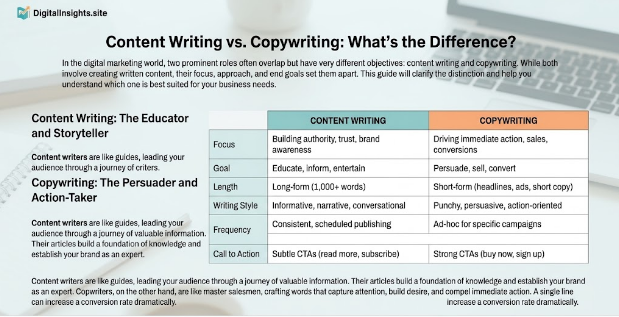
What is Content Writing?
Content writing focuses on creating valuable, educational, and engaging content to inform or entertain an audience. Its main goal is to build brand awareness, earn organic trust, and establish long-term authority.
Key Characteristics:
- Goal: Inform, educate, or entertain.
- Length: Long-form (800 to 2,000+ words).
- Strategy: Heavily relies on SEO (Search Engine Optimization) to attract organic traffic.
- Tone: Informative, narrative, and conversational.
Common Examples of Content Writing:
- Blog posts and articles
- How-to guides and tutorials
- Case studies and eBooks
- Educational newsletters
What is Copywriting?
Copywriting is the art of persuasive writing designed to prompt immediate action. The primary objective of copywriting is conversion—whether that means making a sale, generating a lead, or getting users to sign up for a newsletter.
Key Characteristics:
- Goal: Persuade, sell, and convert.
- Length: Short-form (headlines, ads, landing pages).
- Strategy: Relies on consumer psychology, strong hooks, and clear Calls to Action (CTAs).
- Tone: Punchy, direct, and action-oriented.
Common Examples of Copywriting:
- Sales landing pages
- Facebook, Google, and Instagram ads
- Product descriptions
- Email sales campaigns
- Website taglines and headers
Content Writing vs Copywriting: Key Differences
| Feature | Content Writing | Copywriting |
| Primary Focus | Educating and building trust | Driving immediate sales and conversions |
| Target Audience | Readers seeking information | Prospects ready to take action |
| SEO Focus | High (targets search keywords) | Low to Moderate (targets conversions) |
| Format | Long-form articles and guides | Short-form copy and headlines |
| Call to Action (CTA) | Subtle (e.g., “Read more”, “Subscribe”) | Direct (e.g., “Buy Now”, “Sign Up Today”) |
Read Also: What is SEO Content Writing and How to Drive Traffic with It?