As artificial intelligence rapidly transitions from experimental prototypes to real-time enterprise systems, one truth has become undeniable: AI is only as good as the infrastructure powering it. Behind every Large Language Model (LLM), recommendation engine, and autonomous agent sits a complex, highly orchestrated data engineering stack.
The boundary between traditional data engineering and AI engineering has largely blurred. Modern data platforms are no longer just designed to generate static business intelligence reports; they are built to serve real-time context and high-dimensional vector embeddings directly to intelligent systems.
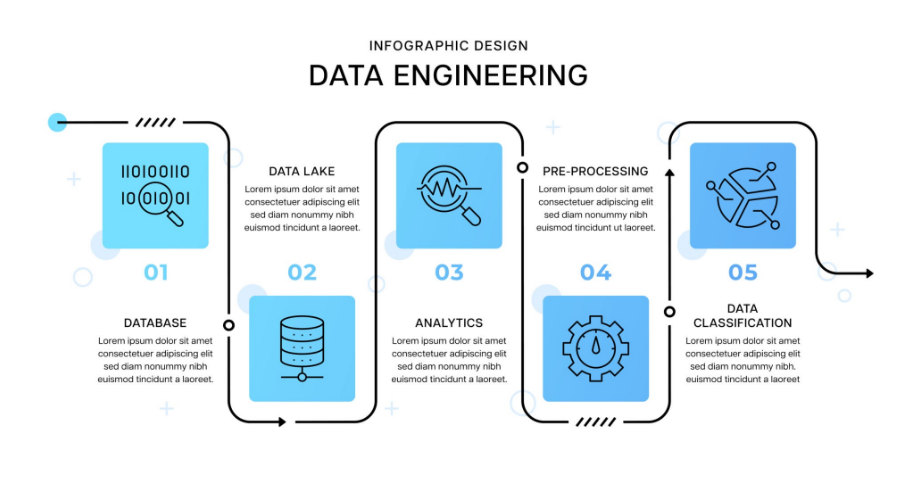
1. Why Data Engineering Is the Backbone of AI
While AI models grab headlines, 80% of AI project work is spent on data ingestion, cleansing, transformation, and retrieval optimization. Without robust data engineering, AI models suffer from three primary failures:
- Garbage In, Garbage Out: Poorly formatted, stale, or biased data leads directly to model hallucinations and untrustworthy outputs.
- Latency Bottlenecks: AI applications—such as real-time conversational agents or fraud detection—require low-latency access to contextual data. Traditional batch-processing pipelines are often too slow to support these needs.
- Scalability & Cost Issues: Ingesting terabytes of unstructured text, audio, and video without proper data indexing can result in skyrocketing cloud compute costs.
2. Key Pillars of Modern AI Data Engineering
To support next-generation AI workloads, modern data engineering focuses on several core architectural shifts:
Unifying Analytical and AI Stacks
Historically, companies maintained separate data warehouses for analytics and dedicated vector/feature stores for machine learning. Today’s architecture emphasizes multimodal lakehouses—unified platforms that can run traditional SQL queries while natively handling vector embeddings, unstructured media (PDFs, images, logs), and graph relationships in one place.
Context Engineering and RAG Pipelines
Rather than rely solely on static pre-training, modern LLM applications use Retrieval-Augmented Generation (RAG). Data engineers design automated pipelines that chunk, embed, index, and retrieve relevant enterprise context on the fly, feeding exact background knowledge into model context windows in milliseconds.
Streaming-First Architectures
AI systems increasingly demand real-time awareness. Technologies like Apache Kafka, Apache Flink, and CDC (Change Data Capture) allow data engineers to continuously stream operational changes into feature stores so AI models operate on live data rather than yesterday’s snapshots.
| Focus Area | Traditional Data Engineering | AI-Driven Data Engineering |
| Primary Data Type | Structured (Tables, Rows, CSVs) | Unstructured & Multimodal (Text, Audio, Vectors) |
| Processing Style | Batch & Daily ETL Jobs | Streaming & Zero-Copy Real-Time Pipelines |
| Primary Consumer | Dashboards, Analysts, BI Tools | Autonomous AI Agents, LLM APIs, Feature Stores |
| Storage Architecture | Relational DBs & Data Warehouses | Multimodal Lakehouses & Vector Databases |
3. Emerging Trends Reshaping the Field
- Agentic Data Workflows: AI copilot systems are being integrated into data pipeline operations, capable of autonomously monitoring pipeline health, detecting schema changes, and optimizing SQL queries.
- Synthetic Data Generation: When real-world training data is scarce or restricted by privacy regulations, data engineers use generative algorithms to construct realistic synthetic datasets.
- Data Observability & Versioning: Applying software engineering best practices—like Git-style data version control (
lakeFS) and automated schema testing—ensures strict governance and auditability for AI inputs.
Final Takeaway
As artificial intelligence advances, the competitive moat for organizations isn’t just the AI model they choose—it’s the quality, speed, and governance of the data pipelines supporting it. Mastering data engineering is essential for converting complex data streams into reliable, real-world AI intelligence.
Wow, I just like that ,👍
Gralem tu od jakichs pieciu miesiecy i nie ukrywam wszedlem tam z ciekawosci, bo brat mojej dziewczyny nie przestawal o tym gadac. Cala rejestracja trwala doslownie chwile, KYC zeszlo mi jeden dzien, co uwazam za norme. Najmniejsza wplata to 50 zl, da sie przezyc.
Automaty to moja glowna dzialka — maja w sumie grubo ponad dwa tysiace tytulow, no ale szczerze to wracam do tych samych kilku. Pragmatik ma tu swoje klasyki — Sweet Bonanza oraz Gates of Olympus, obok tego sporo tytulow Play’n GO w tym Book of Dead, klasyki od NetEnt i pare rzeczy od Betsoft. Ranking kasyn online oferuje calkiem porzadne live: Evolution Gaming z zywymi krupierami, blackjack, bakarat plus Crazy Time i podobne teleturnieje, w ktore wpadam glownie wieczorami.
Pakiet na start to 100% do 2000 zl plus 200 free spinow, wager x40 i to jest ta czesc — warunki sa napisane drobnym drukiem, wiec lepiej przeczytac dwa razy. Krazyl gdzies kod na spiny bez wplaty, choc chyba juz wygasl — aktualne promki widac na ranking kasyn, zanim sie zarejestrujecie.
Wyplacalem kilka razy. E-portfele idzie tego samego dnia, przelew na Visa ciagnela sie dwa dni robocze, z Bitcoinem poszlo ekspresowo. Kilka dni temu wyciagnalem 1800 zl i bylo czysto. Rozliczenia w zlotowkach, bez dodatkowych prowizji za wymiane.
Mobilnie dziala przez przegladarke, aplikacji nie ma i troche mi tego brakuje. Obsluga odpowiada po polsku, czat na zywo w kilka minut, mailem gorzej — dobe czekalem. Dzialaja na licencji Curacao — wiem, ze czesc graczy z Polski to odstrasza. Sprawdzalem kilka podobnych serwisow, to plasuje sie przyzwoicie — solidnie, choc bez fajerwerkow.